In the early summer of 2025, attended the Toronto Prop Expo for the first time. I loved it. While I don't have a formal background in prop-building, as a long-time pro maker I have done some as a hobby, and seeing what some of the experts in the Hollywood North area are capable of was right up my alley. Among the many great presentations was a panel of R2 unit replica builders.
I was looking forward to hearing about how they used ESP32 modules to automate LED sequences and pre-programmed motion. I expected to learn about motor drivers I hadn't tried before and software libraries that might change the way I controlled servos and lights.
Instead, I learned something entirely different.
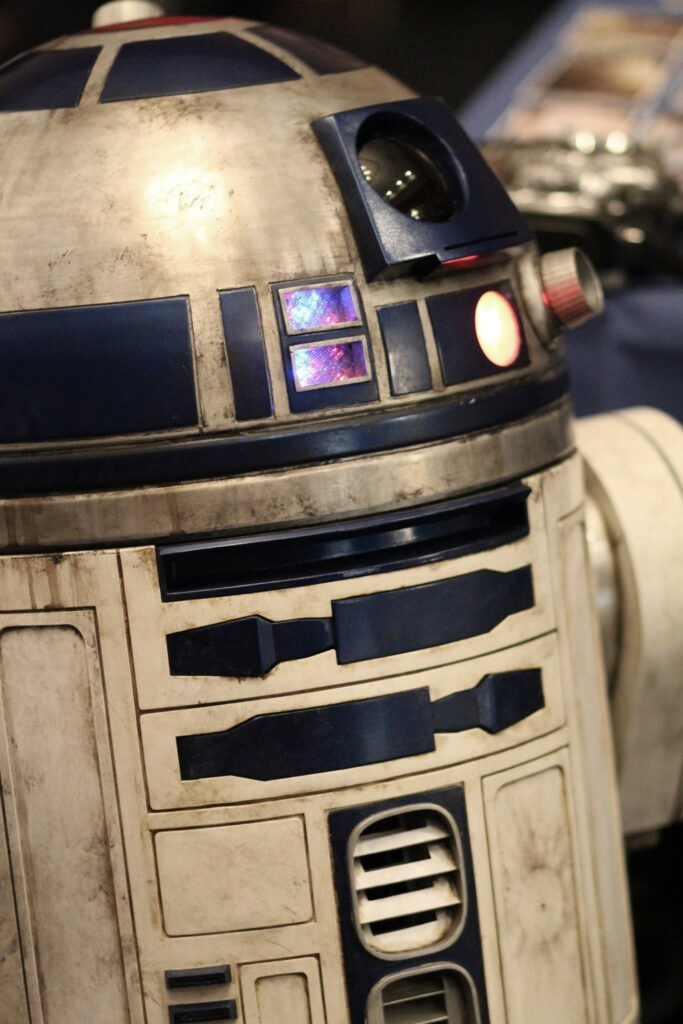
To my surprise, much of the discussion centered around radio-control technology that I had always associated with the 1980s hobby RC world. And don't get me wrong—their craftsmanship was remarkable. The attention to detail, the weathering, and the realism in their paint work were incredible.
What puzzled me was the technology choices.
Platforms like Arduino and ESP32 have made it possible to build sophisticated interactive systems with inexpensive hardware. Why weren't more builders using those tools? Why were so many relying on traditional RC systems?
For months afterward, I kept thinking about it.
Eventually, I realized I had been looking at the problem from the wrong perspective.I had assumed that newer technology was automatically better than older technology. But technology isn't valuable simply because it's newer. Technology is valuable when it solves a real problem.The more I thought about the R2 builders and the systems they used, the more obvious it became. RC equipment is familiar, reliable, and easy to understand. Those are qualities that builders depend on. No new technology is going to replace that unless it genuinely makes their lives easier.
People who build props, puppets, animatronics, and robots are usually focused on creating expressive physical experiences. Most are not looking for an excuse to learn an entirely new software ecosystem, spend weeks debugging code, or become electronics experts.
While platforms like Arduino and ESP32 have opened up incredible possibilities, they also introduce a learning curve. Creative fabricators, prop builders, puppet makers, and kinetic artists often just want to make things move using tools they trust. Ease of use and dependability matter. Unfamiliar technology isn't simply unnecessary—it can become another obstacle standing between an idea and a finished creation.That realization became the foundation for Vivigi.
I began imagining a system that could bridge the gap between traditional control methods and modern motion technology. A platform that would allow people to use familiar devices such as RC transmitters, gamepads, and MIDI controllers while providing powerful tools for recording, editing, automating, and performing motion.The goal was never to replace the tools people already trust.The goal was to make advanced motion control accessible to creative communities that could benefit from it.
Vivigi Motion Studio is the result of that idea, and it continues to evolve as I learn more about the needs of puppeteers, prop builders, animatronics creators, robotics hobbyists, performers, and makers.here