Disclosure
JUSTWAY contacted me and offered to manufacture a custom metal 3D printed part for one of my projects in exchange for a blog post describing the experience. I received the part free of charge. All measurements, observations, and opinions presented here are my own.
Introduction
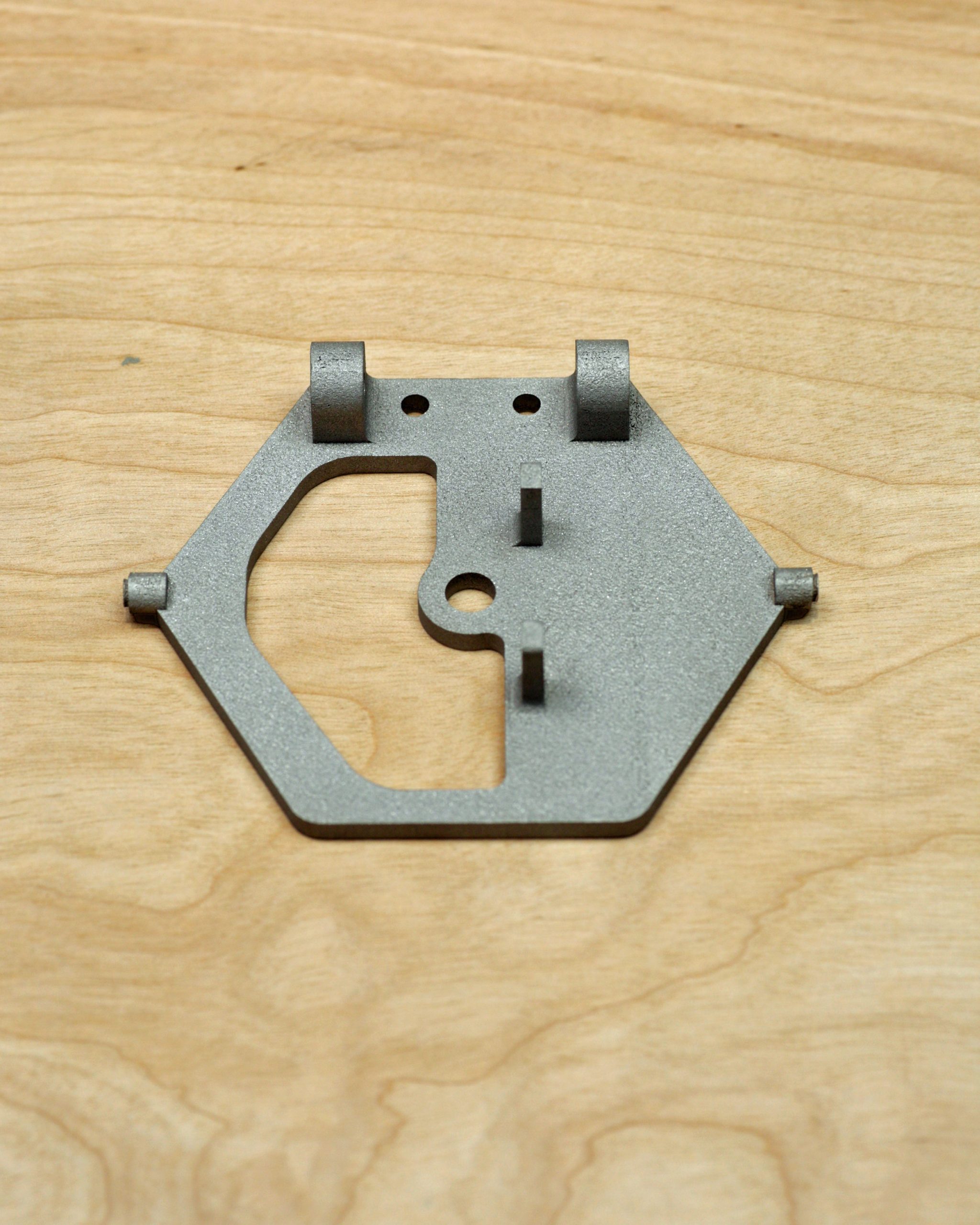
For this project, I needed a custom jaw bracket. The bracket will become the foundation for the puppet's jaw mechanism and serve as a mechanical anchor inside the head. Since JUSTWAY offered to manufacture a custom metal 3D printed part for me, I used the opportunity to have this bracket made in stainless steel.
The result is a useful first component for the rig and an interesting chance to evaluate a metal 3D printed part in a real animatronics application.
About JUSTWAY
JUSTWAY provides custom manufacturing services for makers, engineers, and product developers. Their services include numerous forms of 3D printing, CNC machining, sheet metal fabrication, injection molding, vacuum casting, and a variety of coating options.
For a project like this, that kind of service is useful because animatronic mechanisms often require custom parts. Off-the-shelf brackets rarely match the exact shape, mounting positions, or design constraints of a puppet head mechanism. Being able to upload a custom model and have it manufactured in metal makes it possible to build durable parts that are tailored to a specific mechanical design.
For this project, I used JUSTWAY's metal 3D printing service to produce a single stainless steel jaw bracket.
Project Background
The puppet rig I am building is based on the general idea of a traditional hand-and-mouth puppet, similar in function to the style of puppet where a performer's hand normally controls the mouth and neck movement. In this case, however, the puppet will be animatronic.
The first version of the rig will focus on mouth movement. Later, I plan to add neck turning and eventually eye movement as well.
Vivigi will be used to supply the control signals that drive the motors. The goal is to demonstrate how easily Vivigi can connect to and control different types of servos, including PWM servos and bus servos. As the rig develops, it should also become a practical demonstration platform for more advanced Vivigi features, including motion recording and automatic lip sync.
The jaw bracket is the first major structural component of the head mechanism and serves as the foundation that the rest of the jaw assembly will be built around. It is not a complicated part, but it is important because the rest of the jaw mechanism will build from it.
A properly designed bracket made from an engineering plastic would likely have been sufficient for this application, since the loads involved are relatively modest. I am not convinced that a typical PLA print would be ideal for long-term use in a moving animatronic mechanism, but a stronger engineering plastic such as ABS or nylon could probably have worked. Since JUSTWAY offered to manufacture the part in stainless steel, I took the opportunity to evaluate a metal 3D printed component instead.
The stainless steel is arguably overkill for the immediate requirements of this rig, but in a professional environment where long-term durability matters, that extra strength and rigidity could be ideal.
Ordering Process
I designed the part in FreeCAD and exported the model in STL format. For the order, I sent JUSTWAY the STL file.
The process was straightforward. I submitted the file, selected stainless steel as the material, and completed the order request. They approved the design the same day, and the price and shipping options were then made available. In my case, the part was complimentary because of the sponsorship, but at that point a normal customer would proceed through checkout and manufacturing would begin.
No design changes were suggested, and the part was accepted as submitted.
From the start of the process to receiving the finished part, the total time was less than two weeks. Considering that the part was manufactured and shipped internationally to Ontario, Canada, I thought the turnaround time was quite reasonable.
Unboxing and Packaging
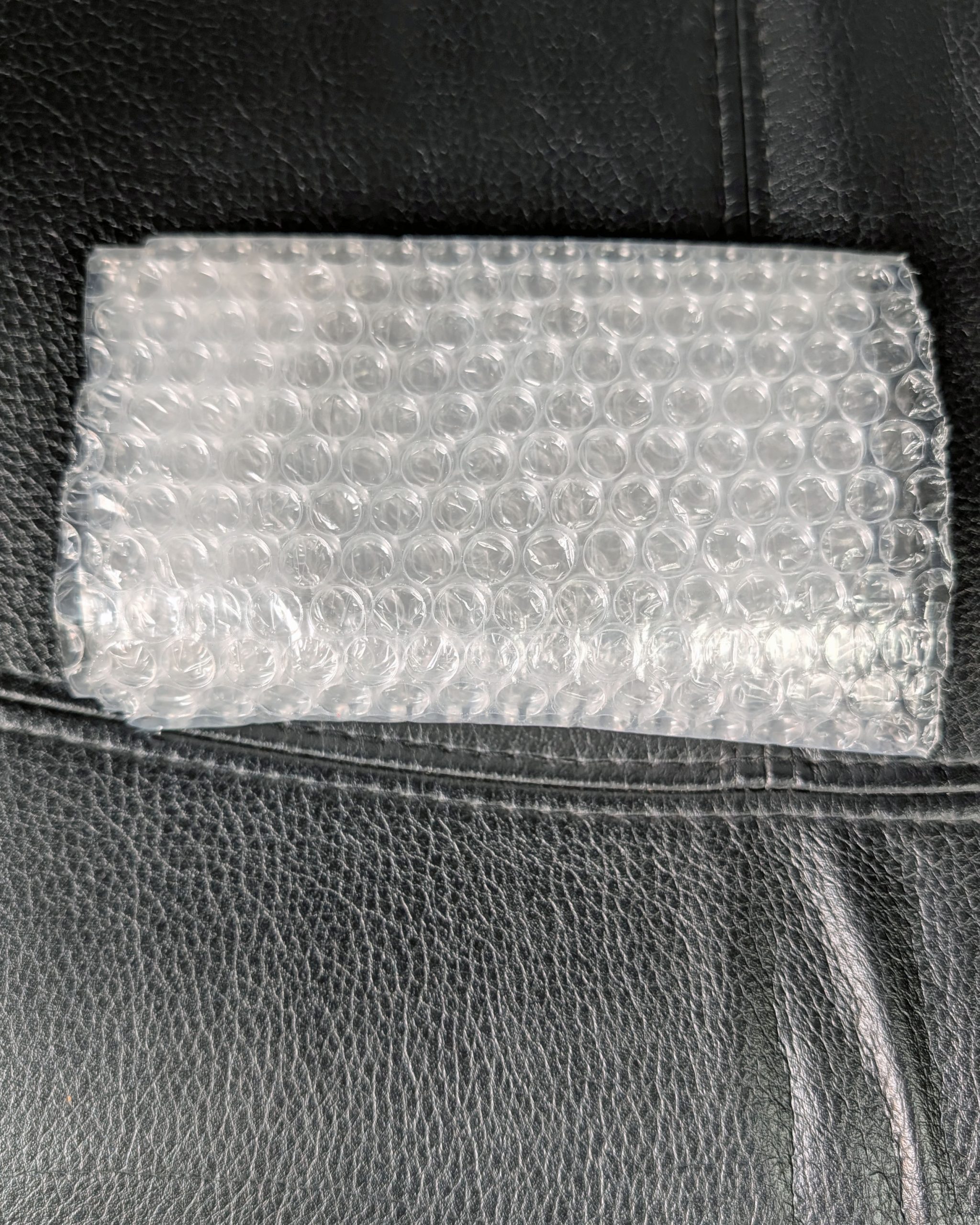
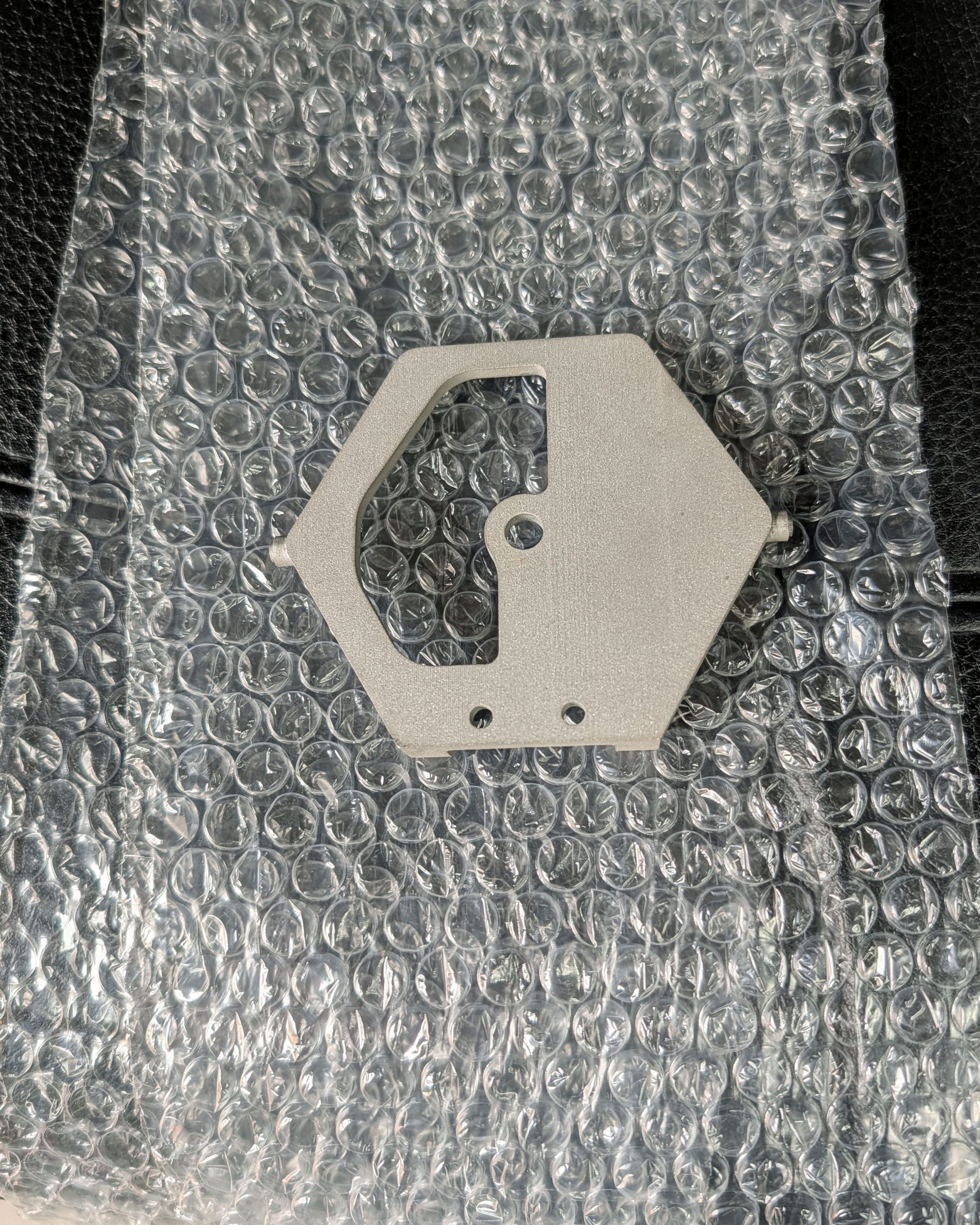
The part arrived in good condition. The shipping box was intact, with no visible crushing or signs of impact during transit. Inside, the part was individually wrapped in several layers of bubble wrap. The packaging was sufficient, and I did not feel as though the part was at risk of being damaged during shipping. The order contained one stainless steel jaw bracket, as expected. There was no damage to the part or the packaging.
First Impressions and Surface Quality
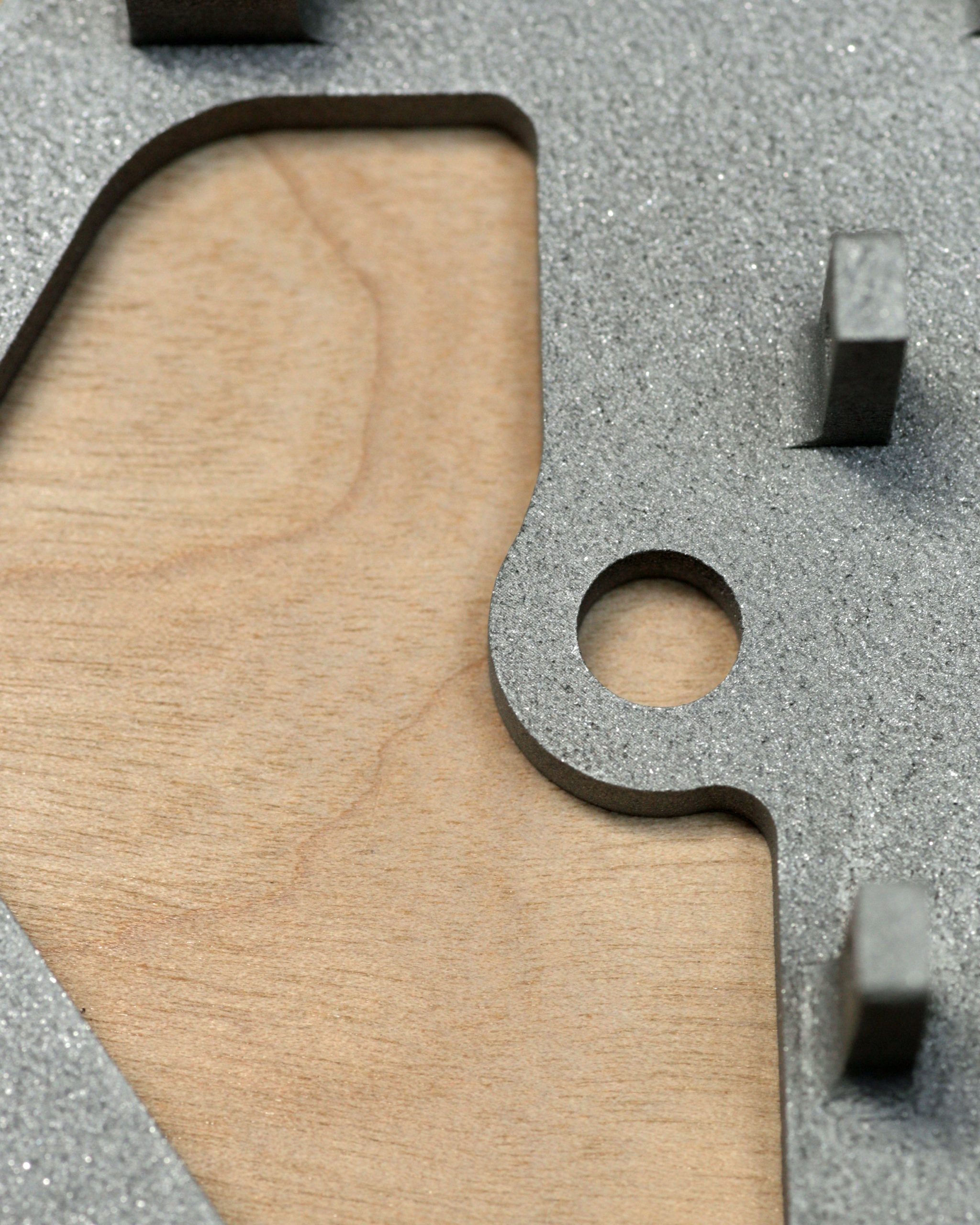
This was my first time handling a metal 3D printed stainless steel part, so I did not have a strong expectation for how the surface would look or feel. The finish is a dull gray, somewhat similar to the appearance of a sandblasted metal part. The surface has a noticeably rough texture. That said, this seems to be inherent to the metal 3D printing process rather than a specific flaw in JUSTWAY's work.
For my application, the surface finish is not a problem. This bracket is a structural component inside an animatronic mechanism, not a cosmetic exterior part. If I needed a smooth finish, I would not choose this process without expecting to do additional filing, sanding, machining, or other finishing work afterward.
For a hidden or functional mechanical bracket where surface smoothness is not important, the finish is acceptable for my needs. I did notice some very slight voids on convex surfaces with tight radii, but they are minimal and do not appear to affect the usefulness of the part for this project. In terms of whether they could be a weakness in the metal, I can't really say because I'm not an expert on that. My gut as a long-time maker is that the pitting is too small to matter.
Dimensions and Precision
The bracket is approximately 96 mm at its widest point and weighs 127 grams.
Holding the finished part was a good reminder of how different a metal component feels compared to a typical 3D printed plastic part. At 127 grams, it has a reassuring amount of mass and rigidity for a component of this size.
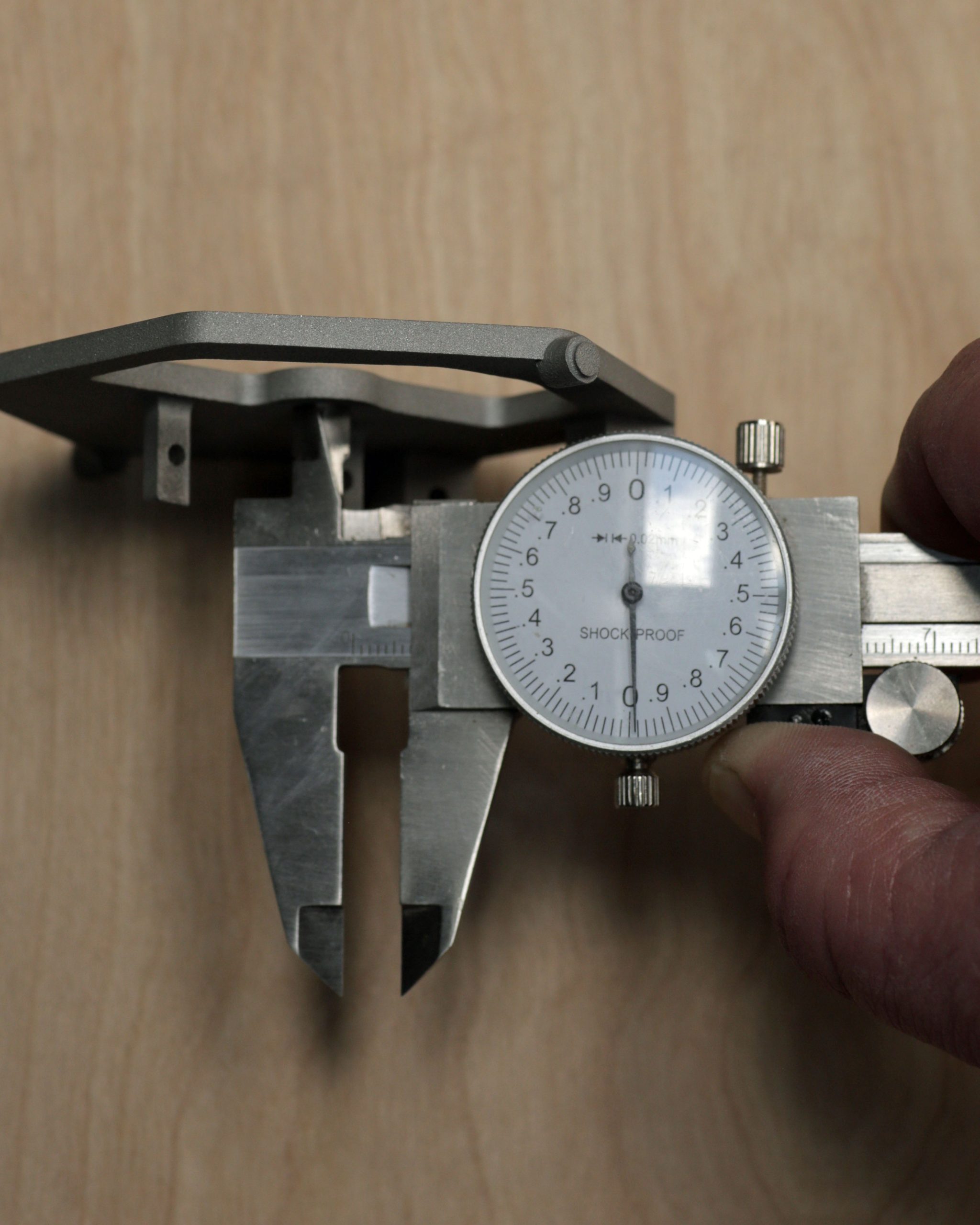
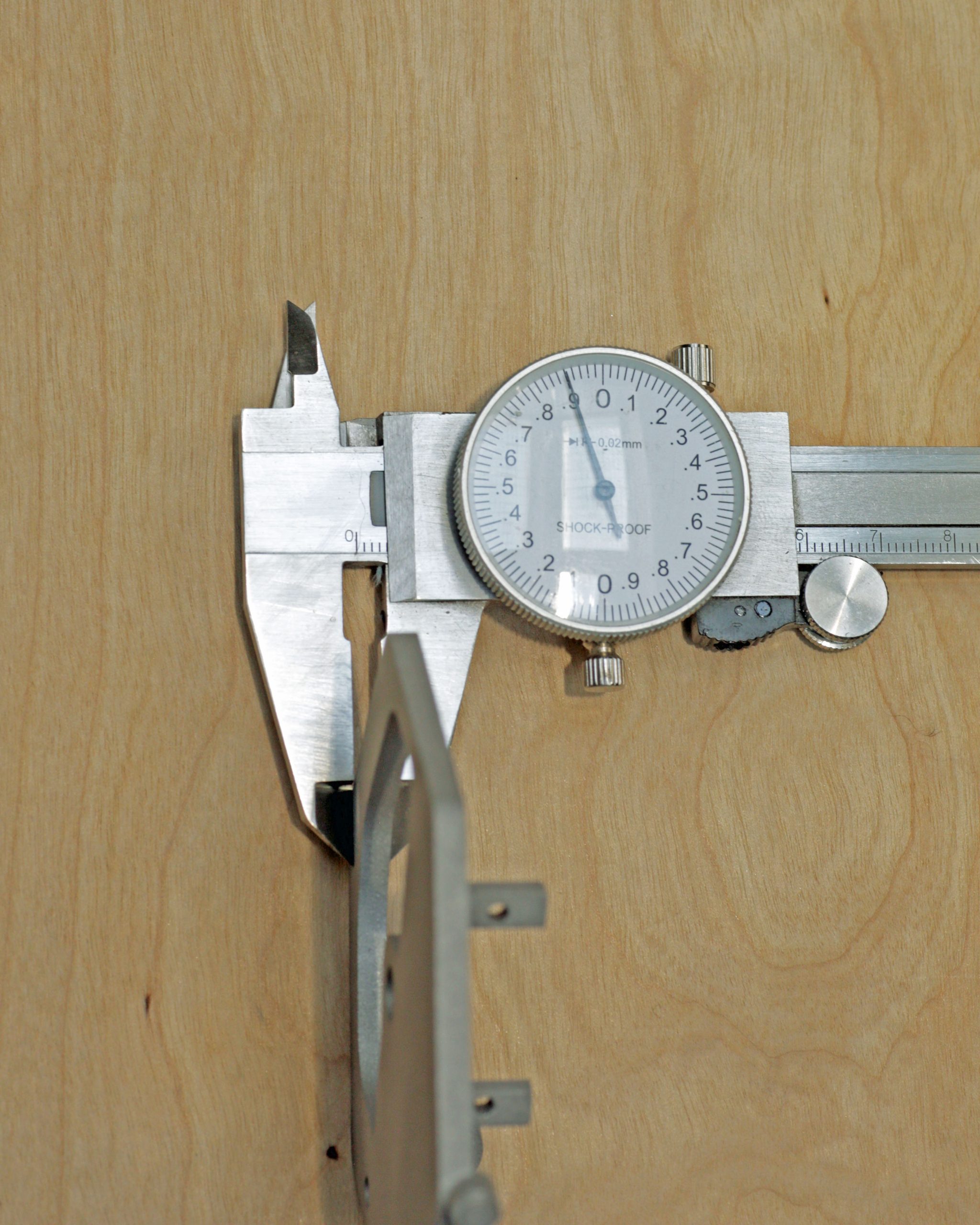
I measured a few key dimensions with calipers to compare the finished part against my design.The part thickness was designed to be 4.0 mm. I measured it at approximately 3.9 mm.The center hole was designed to be 7.0 mm in diameter. I measured it at approximately 6.85 mm.
I was especially impressed by the center hole measurement. For a metal 3D printed part, seeing that feature come in so close to the intended size was encouraging.I did not need to drill, file, sand, or modify the bracket before using it. For my purposes, the part matched the design well enough to continue building the mechanism around it.
However, if the part needed a smooth cosmetic finish, I would have expected to do some additional sanding and finishing work.
Final Application in the Animatronic Puppet Rig
This jaw bracket will become the foundation for the puppet's jaw mechanism. The broader rig will eventually function somewhat like a hand-and-mouth puppet, but with the motion generated by motors rather than a performer's hand.
The initial version will focus on mouth movement. Once that is working, I plan to continue adding additional motion, starting with neck turning and eventually eye movement.
The finished rig will be used to demonstrate Vivigi Motion Studio controlling real-world animatronic hardware. I want it to show how easy it can be to connect servos, create motion, record performances, and use advanced tools like automatic lip sync.
This bracket is only the first step, but it gives me a strong mechanical foundation to build on.
Overall Thoughts
Overall, I am certainly happy with the part.
The ordering process was straightforward, the part arrived in less than two weeks, the packaging was protective, and the measured dimensions were reasonably close to the CAD model. The surface texture is rough compared with a machined part, but that is not a problem for this use case.
The stainless steel material is more than this mechanism strictly requires, but that makes the part interesting. For a prototype, an engineering plastic might have been enough. For a long-term demonstration rig that may be handled, rebuilt, adjusted, transported, and used repeatedly, a stainless steel bracket gives me confidence that this part will not be the weak point. It's nice to feel confident that it will hold up. It's really discouraging when you put thought into a design but the material choice becomes a failure point in the final product.
I would not choose metal 3D printing for every part. If a smooth cosmetic finish is required, I would expect to do additional finishing work. For that reason, for cosmetic parts, metal 3D printing—at least based on my experience in this case—would not be my first choice. However, for a custom mechanical component where strength, rigidity, and design flexibility matter more than surface smoothness, this process makes sense.
This part met the requirements of the project, and based on this experience I would gladly use JUSTWAY's metal 3D printing again for similar mechanical components.
For this animatronic puppet rig, the JUSTWAY metal 3D printed jaw bracket is a solid first step.
If you're interested in trying out JUSTWAY.COM just click the link.